Spicy Drunken Noodles Recipe- Quick Thai Flavor Adventure
Drunken noodles, or Pad Kee Mao as it’s known in Thailand, are an absolute revelation. If you’ve ever craved a dish that perfectly balances savory, spicy, and just a hint of sweetness, you’ve likely found yourself drawn to the non-intoxicating allure of drunken noodles. There’s something incredibly satisfying about the broad, chewy rice noodles coated in a vibrant sauce, infused with the fragrant kick of Thai basil and a medley of fresh vegetables. What truly makes drunken noodles so beloved is their bold, unapologetic flavor profile. They’re not shy; they demand your attention and reward you with an unforgettable culinary experience. Forget bland, forget boring – this is a dish that dances on your palate and leaves you planning your next encounter with its fiery embrace. Let’s dive into making these irresistible drunken noodles at home!
Drunken Noodles: A Flavor Explosion You Won’t Forget
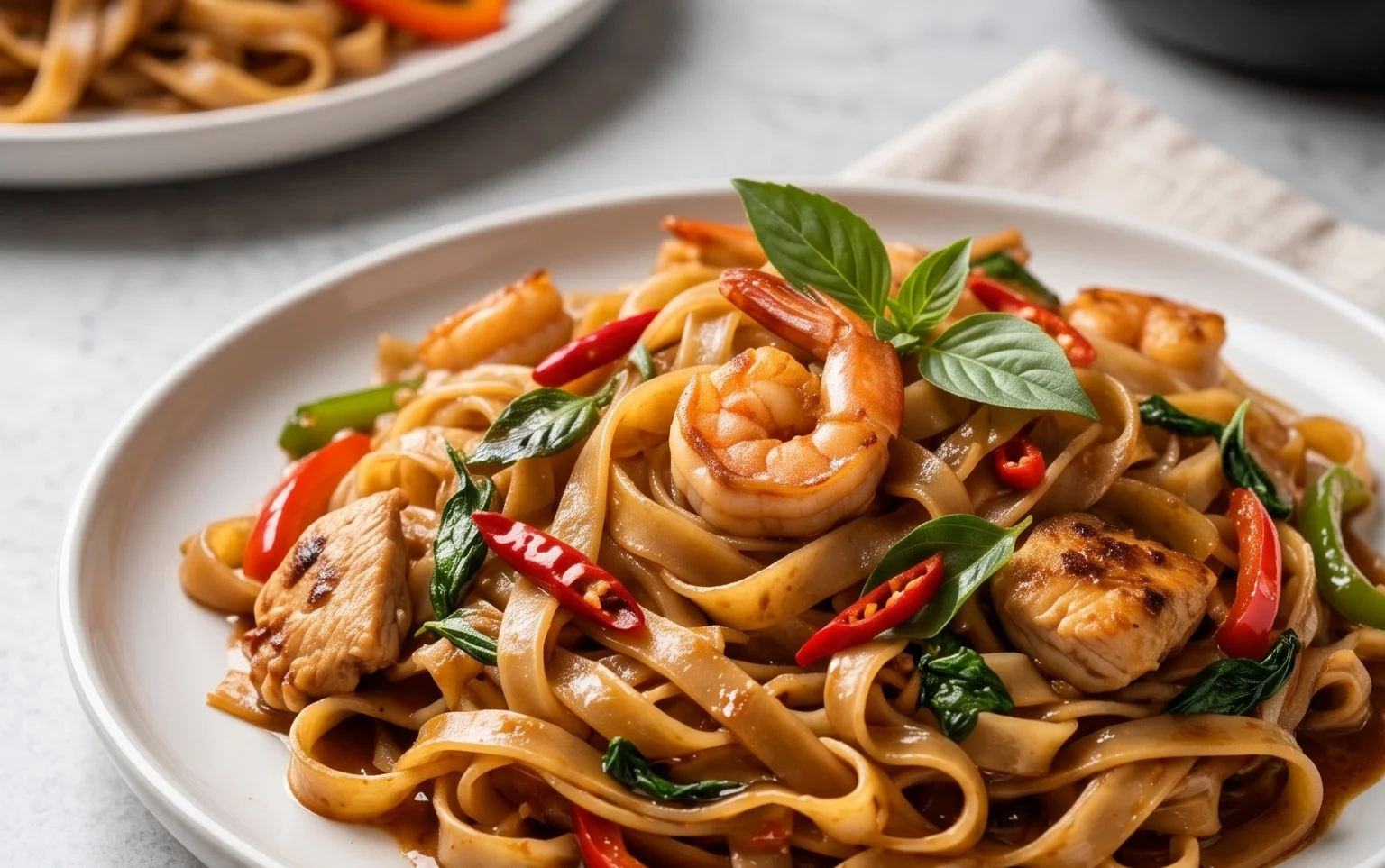
Get ready to embark on a culinary adventure with this recipe for Pad Kee Mao, more commonly known as Drunken Noodles. Don’t let the name fool you; while traditionally associated with late-night cravings after a bit of revelry, this dish is a sophisticated symphony of savory, spicy, and slightly sweet flavors that deserves a spot on your dinner table any night of the week. The wide, chewy rice noodles, stir-fried with tender chicken, vibrant vegetables, and an aromatic blend of spices, create a truly unforgettable dining experience. It’s a dish that’s as fun to make as it is to eat, and I’m thrilled to share my go-to method with you.
Ingredients:
Getting Started: Prepping Your Ingredients
Before we dive into the fiery wok, a little preparation goes a long way. This is where the magic begin extracts, ensuring a smooth and successful cooking process.
1. Noodle Preparation: The Chewy Foundation
First things first, let’s tackle the noodles. Since we’re using dried medium-wide rice noodles, they’ll need a little soak. Follow the package instructions carefully, but typically, you’ll want to submerge them in hot (not boiling) water for about 10-15 minutes, or until they are pliable but still have a slight bite (al dente). Drain them thoroughly and set them aside. If they seem a bit sticky, a tiny drizzle of oil can help prevent them from clumping. We want them perfectly separated, ready to absorb all those delicious sauce flavors.
2. Chicken Marination: Building Flavor from Within
While the noodles are soaking, let’s give our chicken some love. In a small bowl, toss the thinly sliced chicken with 1 teaspoon of soy sauce. This simple marinade not only tenderizes the chicken but also infuses it with a base layer of savory flavor. Give it a quick mix and let it sit while you prepare the rest of your ingredients. This small step makes a noticeable difference in the final taste.
3. Sauce Creation: The Heart of the Dish
Now for the star of the show – the sauce! In a separate bowl, whisk together the following: 3 teaspoons soy sauce, 1.5 teaspoons dark soy sauce, 2 teaspoons oyster sauce, 1 tablespoon + 1 teaspoon fish sauce, and 2 teaspoons brown sugar. The dark soy sauce is key for that signature deep, rich color, while the fish sauce provides an unparalleled umami punch. The brown sugar is essential for balancing the saltiness and heat, creating a harmonious flavor profile. Give this a good stir until the sugar is dissolved.
4. Vegetable and Aromatic Prep: A Colorful Ensemble
It’s time to chop, slice, and dice our way to a vibrant stir-fry. Thinly slice the onion. Mince your garlic – the more, the merrier for that pungent aroma! Thinly slice your Thai red chili peppers; remember, these pack a punch, so adjust the quantity based on your heat tolerance. If you’re sensitive to spice, you can remove the seeds. Roughly chop the baby bok choy, making sure to separate the stems from the leaves, as the stems will require a slightly longer cooking time. Finally, slice your green onion, keeping the white and green parts separate. We’ll use the whites for their pungent flavor early in the cooking process and the greens for a fresh, bright garnish at the end. And don’t forget to have your Holy basil leaves ready – their distinct peppery and anise-like fragrance is what truly elevates Drunken Noodles.
The Stir-Fry: Bringin extractg It All Together
With all our components prepped and ready, it’s time for the main event: the stir-fry! Speed is your friend here, so have everything within easy reach.
5. The Fiery Dance in the Wok
Heat a wok or a large, heavy-bottomed skillet over high heat. Add 1 tablespoon of vegetable oil. Once the oil is shimmering, add your marinated chicken. Stir-fry until it’s just cooked through and lightly browned. Remove the chicken from the wok and set it aside.
Next, add the remaining 2 tablespoons of vegetable oil to the hot wok. Add the minced garlic and sliced white parts of the green onion. Stir-fry for about 30 seconds until fragrant – be careful not to burn the garlic! Now, toss in the sliced onion and the bok choy stems. Stir-fry for about 1-2 minutes until they begin extract to soften.
Add the sliced Thai red chili peppers and stir-fry for another minute, releasing their spicy oils into the wok. This is where the “drunken” element really starts to come alive!
Now, it’s time for the noodles. Add the drained rice noodles to the wok. Pour the prepared sauce mixture over the noodles and ingredients. Toss everything together quickly and continuously, ensuring the noodles are evenly coated with the sauce. Stir-fry for about 2-3 minutes, allowing the noodles to absorb the flavors and soften further.
Finally, add the bok choy leaves and the cooked chicken back into the wok. Toss everything together until the leaves are just wilted. Stir in the fresh Holy basil leaves and the sliced green parts of the green onion. Give it a final toss for about 30 seconds, just until the basil is fragrant and slightly wilted. The heat of the wok will do the rest.
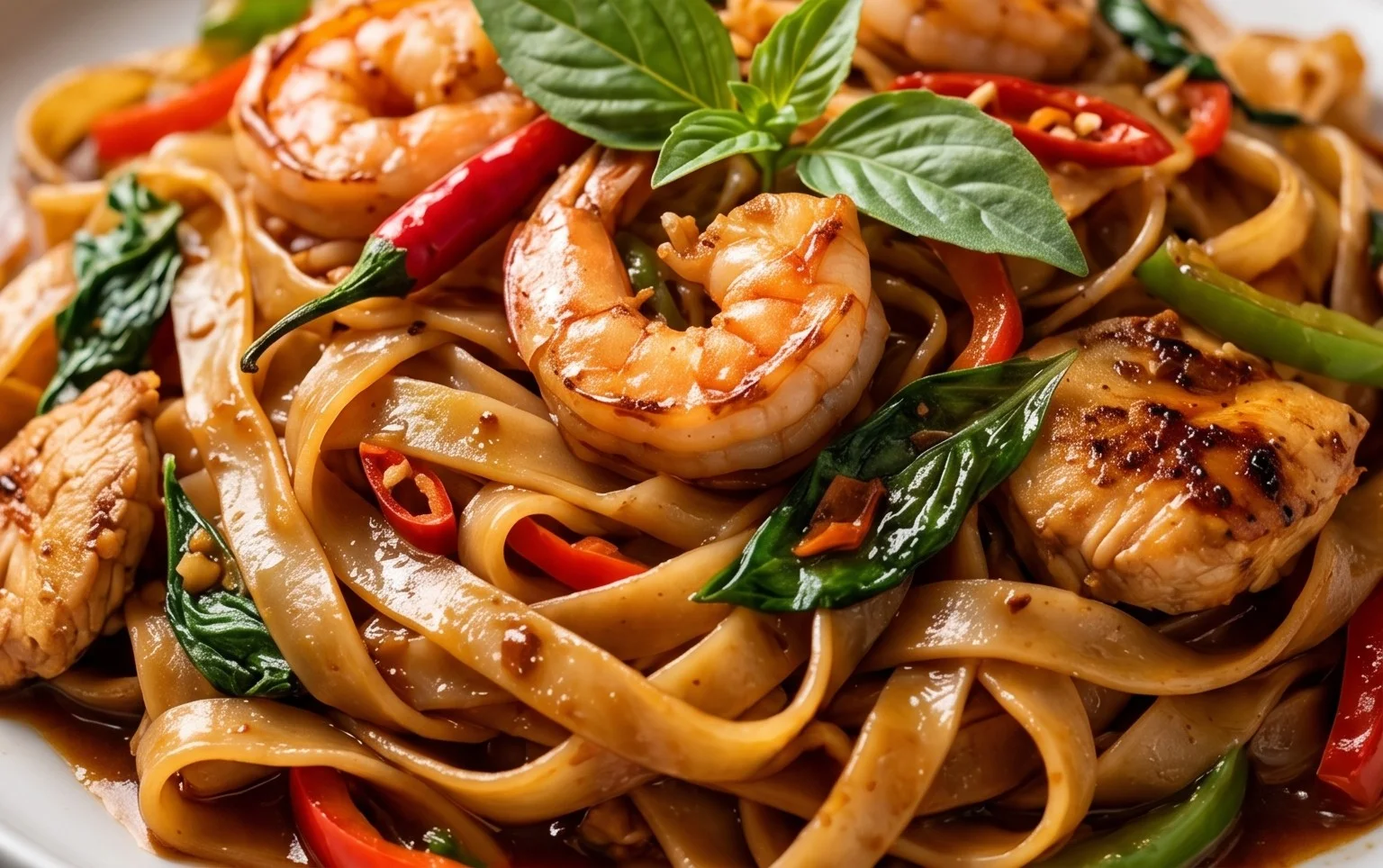
And there you have it – a steaming, fragrant plate of Drunken Noodles, ready to be devoured! Serve immediately and enjoy the incredible depth of flavor and satisfying chew of these legendary noodles.
Conclusion:
There you have it – a guide to making incredible Drunken Noodles right in your own kitchen! This recipe is fantastic because it delivers that authentic, vibrant Thai street food flavor with a satisfying chew and a delightful kick. The balance of sweet, savory, spicy, and umami is truly addictive, making it a meal that’s both comforting and exciting. It’s a relatively quick dish to prepare, perfect for a weeknight adventure or a flavorful weekend treat.
When it comes to serving, these Drunken Noodles are best enjoyed immediately to appreciate the texture of the noodles and the freshness of the ingredients. I love pairing them with a crisp, refreshing cucumber salad or some simple steamed bok choy to balance the richness. For variations, don’t hesitate to experiment! You can swap the protein for shrimp, tofu, or even add some crispy fried chicken. Feel free to adjust the spice level to your liking by increasing or decreasing the chili peppers. And if you’re feeling adventurous, a splash of fish sauce or a pinch of sugar can further enhance the flavor profile.
I truly hope you give this Drunken Noodles recipe a try. It’s a journey for your taste buds, and I’m confident you’ll love the results as much as I do!
Frequently Asked Questions about Drunken Noodles:
What kind of noodles are best for Drunken Noodles?
Traditionally, wide rice noodles (Sen Yai) are used for Drunken Noodles. Their soft, chewy texture is perfect for absorbing the flavorful sauce. However, if you can’t find them, medium or wide flat rice noodles work well as a substitute. Avoid very thin noodles as they can become mushy.
How spicy are Drunken Noodles usually?
The “drunken” in Drunken Noodles often refers to its spicy nature, meant to quench a thirst! The spice level is highly customizable. The recipe provides a guideline, but you can easily adjust the amount of Thai chilies or add a pinch of red pepper flakes to increase the heat, or omit them if you prefer a milder dish.
Can I make Drunken Noodles ahead of time?
While Drunken Noodles are best enjoyed fresh, you can do some prep work in advance. You can chop all your vegetables, prepare your protein, and even mix your sauce ingredients. However, it’s best to cook the noodles and stir-fry everything just before serving to maintain the ideal texture and prevent the noodles from clumping together.
Drunken Noodles (Pad Kee Mao)
A flavorful and spicy Thai stir-fried noodle dish with tender chicken and fresh vegetables, often made with a hint of rice wine or other spirits (though this version omits alcohol for wider appeal).
Ingredients
-
250 grams medium wide rice noodles (dried)
-
250 grams chicken thighs or chicken breast
-
1 teaspoon soy sauce
-
3 tablespoons vegetable or canola oil
-
1 tablespoon minced garlic
-
1/2 onion (sliced)
-
2-3 Thai red chili peppers
-
4-5 Baby bok choy
-
1 cup Holy basil
-
1 Green Onion (White and green parts separate)
-
3 teaspoons soy sauce
-
1.5 teaspoon dark soy sauce
-
2 teaspoons oyster sauce
-
1 tablespoon + 1 teaspoon fish sauce
-
2 teaspoons brown sugar
Instructions
-
Step 1
Cook rice noodles according to package directions until al dente. Drain and set aside. If using fresh noodles, soak them in warm water for 10 minutes, then drain. -
Step 2
Prepare the sauce by whisking together 3 teaspoons soy sauce, 1.5 teaspoon dark soy sauce, 2 teaspoons oyster sauce, 1 tablespoon + 1 teaspoon fish sauce, and 2 teaspoons brown sugar in a small bowl. -
Step 3
Slice chicken into bite-sized pieces and marinate with 1 teaspoon soy sauce. Mince garlic and slice onion and chili peppers. Separate white and green parts of green onion. -
Step 4
Heat 2 tablespoons of oil in a wok or large skillet over medium-high heat. Add minced garlic and sliced chili peppers, stir-fry until fragrant, about 30 seconds. -
Step 5
Add sliced onion and stir-fry for 1 minute. Then add the marinated chicken and stir-fry until almost cooked through. -
Step 6
Add baby bok choy and the prepared sauce to the wok. Stir well to combine and cook for another 2-3 minutes until bok choy is tender-crisp. -
Step 7
Add the cooked rice noodles and holy basil to the wok. Toss everything together until the noodles are well coated with the sauce and the basil is wilted, about 1-2 minutes. -
Step 8
Stir in the white parts of the green onion. Serve immediately, garnished with the green parts of the green onion.
Important Information
Nutrition Facts (Per Serving)
It is important to consider this information as approximate and not to use it as definitive health advice.
Allergy Information
Please check ingredients for potential allergens and consult a health professional if in doubt.