
Easy Miso Soup Recipe- Quick & Delicious Japanese Classic
Miso soup recipe: the quintessential comfort food, a warm hug in a bowl that transports you straight to a cozy izakaya or a serene Japanese kitchen. Have you ever wondered what magic lies within that deceptively simple broth? It’s a culinary cornerstone for a reason, beloved for its profound umami depth, its delicate balance of salty and savory, and its incredible versatility. This isn’t just any soup; it’s a gateway to exploring the nuanced flavors of Japan, made accessible right in your own home. What makes this dish so special is the humble yet mighty miso paste, a fermented soybean product that’s packed with probiotics and an incredible flavor profile that’s both earthy and slightly sweet. Ready to unlock the secrets to a truly authentic and deeply satisfying miso soup recipe? Let’s dive in and create something truly delicious together.

Miso Soup Recipe
There’s something incredibly comforting and nourishing about a steaming bowl of miso soup. It’s a staple in Japanese cuisine, known for its savory umami flavor and simple, wholesome ingredients. Making it from scratch is surprisingly easy and can be done in under 15 minutes, making it the perfect quick and healthy addition to any meal, whether it’s breakfast, lunch, or dinner. The beauty of miso soup lies in its versatility – while this recipe provides a classic foundation, you can easily customize it with your favorite vegetables or proteins. Let’s dive into how to create this soul-warming dish.
Ingredients:
Cooking Instructions:
To begin extract crafting your delicious miso soup, let’s gather our ingredients and prepare our workspace. Having everything ready beforehand will make the cooking process smooth and enjoyable. The dashi is the soul of the soup, providing a deep, oceanic flavor base. If you’re new to dashi, it’s a fundamental Japanese stock made from kombu (dried kelp) and katsuobushi (dried bonito flakes). You can find pre-made dashi powder or liquid at most Asian grocery stores, which is incredibly convenient for quick preparations. Alternatively, you can make it from scratch, but that’s a topic for another day!
The dried seaweed, also known as wakame, will rehydrate and add a pleasant texture and subtle brininess to the soup. Ensure you have a good quality dried seaweed. The silken tofu will lend a delicate, melt-in-your-mouth quality. Cutting it into small, bite-sized pieces ensures it distributes evenly throughout the soup and is easy to eat. Miso paste is the star, and its flavor can vary significantly depending on the type. White miso (shiro miso) is milder and slightly sweeter, while red miso (aka miso) is more robust and saltier. You can use either, or even a blend, adjusting the quantity to your personal preference for saltiness and depth of flavor. Finally, the scallions, or green onions, will add a fresh, aromatic finish. Chop them just before serving for the most vibrant flavor and color.
1. Prepare the Dashi and Rehydrate the Seaweed:
Pour the 2½ cups of dashi into a medium saucepan. If you’re using dashi powder, follow the package instructions to prepare it. If you’re using dried wakame, it’s a good idea to give it a quick rinse under cold water in a fine-mesh sieve to remove any excess salt or grit. Then, add the heaping tablespoon of dried seaweed directly to the dashi in the saucepan. Let it sit for a few minutes to begin extract rehydrating while you proceed with the next step. This allows the seaweed to soften and expand, making it ready to cook. Don’t worry if it doesn’t fully rehydrate at this stage; it will continue to soften as the soup simmers.
2. Gently Heat the Dashi and Soften the Tofu:
Place the saucepan with the dashi and seaweed over medium heat. Allow it to come to a gentle simmer. Avoid boiling the dashi vigorously, as this can diminish its delicate flavor. Once the dashi is warm and the seaweed is starting to soften, carefully add the 4 oz of silken tofu, cut into small pieces, to the pot. Stir gently to distribute the tofu evenly within the liquid. The goal here is to warm the tofu through without breaking it apart too much. Silken tofu is very delicate, so a light touch is key. Let the mixture simmer for about 2 to 3 minutes, just until the tofu is heated.
3. Dissolve the Miso Paste:
This is a crucial step to ensure your miso soup is perfectly seasoned and the miso’s beneficial properties are preserved. Remove the saucepan from the heat. Take a small amount of the warm dashi from the pot (about ¼ cup) and place it in a small bowl. Add the 2 to 2½ tablespoons of miso paste to this bowl. Using a whisk or a fork, vigorously stir the miso paste into the warm dashi until it is completely smooth and no lumps remain. This process, called “tempering,” gently introduces the miso to the heat and prevents it from clumping or becoming grainy in the soup. It also helps to preserve the beneficial live cultures in the miso.
4. Incorporate the Miso into the Soup:
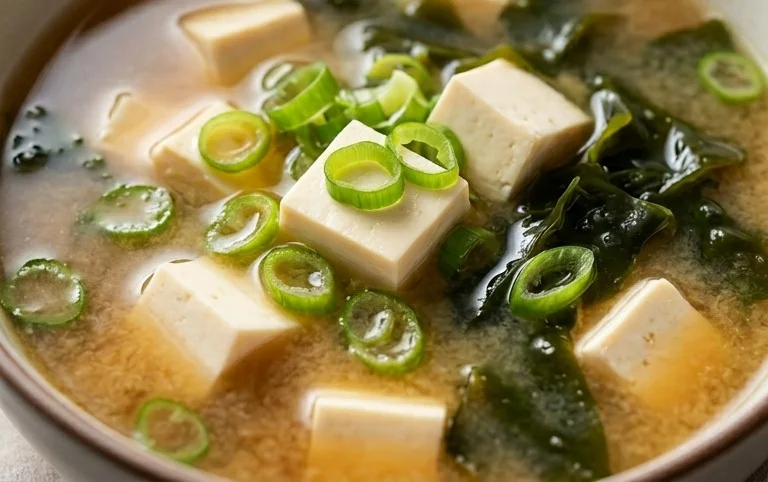
Once the miso paste is fully dissolved in the small bowl, pour the smooth miso mixture back into the saucepan containing the dashi, seaweed, and tofu. Stir gently to combine everything thoroughly. It’s important not to boil the soup after adding the miso. Boiling miso can destroy its delicate aroma and flavor, as well as its nutritional benefits. Simply heat the soup gently until it is warm enough to serve. You should see a lovely, slightly cloudy broth forming with the soft tofu and rehydrated seaweed visible.
5. Final Seasoning and Serving:
Taste the miso soup and adjust the miso paste if necessary. If you prefer a stronger miso flavor or a saltier soup, you can dissolve a little more miso paste in a small amount of warm broth and add it to the pot. Once you’re satisfied with the flavor, ladle the hot miso soup into individual serving bowls. Garnish each bowl generously with the chopped scallion. The fresh green onions add a bright contrast in flavor and color to the savory broth. Serve immediately and enjoy this incredibly satisfying and healthy bowl of homemade miso soup! It’s perfect on its own or as an accompaniment to sushi, rice dishes, or stir-fries.
Conclusion:
And there you have it! Crafting this delicious and incredibly versatile miso soup recipe is a breeze, making it a perfect addition to your weeknight meals or a delightful starter for any occasion. The beauty of this recipe lies in its simplicity and its ability to be customized to your heart’s content. Whether you’re a seasoned cook or just starting your culinary journey, you’ll find this recipe incredibly rewarding, offering a taste of authentic Japanese comfort in every warm, savory spoonful. Its rich umami flavor, derived from the star ingredient, miso paste, is incredibly satisfying and can be adapted to suit diverse dietary needs and flavor preferences.
I encourage you to dive in and give this miso soup recipe a try! It’s fantastic served on its own as a light lunch or appetizer, or alongside grilled fish, sushi, or a rice bowl. Don’t be afraid to experiment with different additions like silken tofu, mushrooms, spinach, or even a sprinkle of toasted sesame seeds for extra texture and flavor.
Frequently Asked Questions:
What kind of miso paste should I use for this miso soup recipe?
You can use a variety of miso pastes! Red miso (akamiso) offers a deeper, richer flavor, while white miso (shiromiso) is milder and sweeter. A blend of both can also create a complex and delicious taste. Experiment to find your favorite!
Can I make this miso soup recipe vegan?
Absolutely! Simply ensure you are using a vegetarian dashi (e.g., made with kombu and dried shiitake mushrooms) instead of traditional bonito flakes. Most miso pastes are already vegan, but it’s always good to check the ingredients.
How long does leftover miso soup last?
Miso soup is best enjoyed fresh. While you can store leftovers in an airtight container in the refrigerator for 1-2 days, the flavor and texture can change. It’s generally not recommended to reheat miso soup multiple times as it can diminish the delicate flavors.
Miso Soup Recipe
A simple and comforting miso soup recipe.
Ingredients
-
2½ cups Dashi
-
1 heaping tablespoon dried seaweed
-
4 oz silken tofu, cut into small pieces
-
2-2½ tablespoons white miso paste, or to taste
-
1 tablespoon scallion, chopped
Instructions
-
Step 1
In a medium pot, bring the dashi to a simmer over medium heat. -
Step 2
Add the dried seaweed to the simmering dashi and let it rehydrate for 1-2 minutes. -
Step 3
Gently add the cubed silken tofu to the pot. -
Step 4
In a small bowl, whisk the miso paste with a ladleful of the hot dashi until smooth. This prevents clumping. -
Step 5
Stir the dissolved miso mixture back into the pot. Do not boil after adding miso, as it can diminish the flavor and aroma. -
Step 6
Simmer for another minute to heat the tofu through. -
Step 7
Ladle the soup into bowls and garnish with chopped scallions.
Important Information
Nutrition Facts (Per Serving)
It is important to consider this information as approximate and not to use it as definitive health advice.
Allergy Information
Please check ingredients for potential allergens and consult a health professional if in doubt.