Japchae Korean Glass Noodle Stir Fry Recipe
Japchae (Korean Glass Noodle Stir Fry) is more than just a dish; it’s an experience that tantalizes your taste buds and delights your eyes with its vibrant colors. For anyone who’s ever delved into the world of Korean cuisine, or even just enjoys a fantastic stir-fry, Japchae is a name that likely rings a bell. Its magic lies in the perfect marriage of textures and flavors. Imagin extracte chewy, translucent sweet potato noodles (dangmyeon) glistening with a savory-sweet sauce, tossed with a medley of crisp-tender vegetables like spinach, carrots, and mushrooms, and often studded with tender strips of beef. What truly makes Japchae so beloved is its incredible versatility and how it feels both comforting and celebratory. It’s a dish that’s perfect for a weeknight meal but also shines at special gatherings. The sheer visual appeal, coupled with its deeply satisfying umami notes, makes this Korean glass noodle stir fry an undeniable star on any table.
Why You’ll Fall in Love with Japchae
A Feast for the Senses
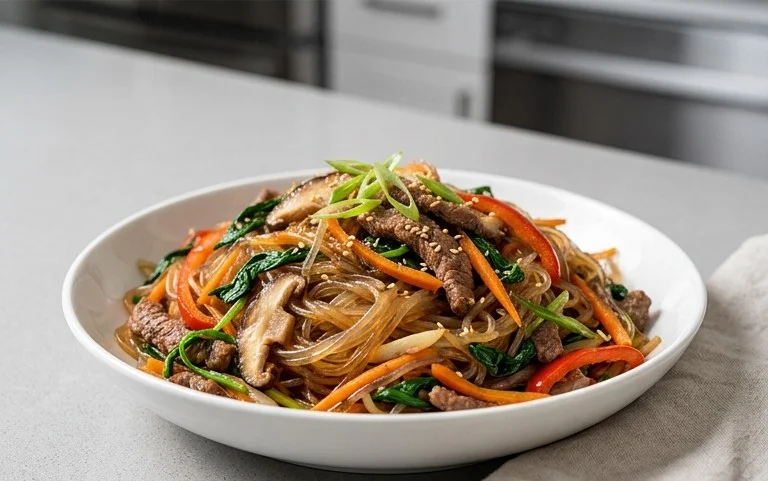
Japchae is a beloved Korean dish that’s as beautiful to look at as it is delicious to eat. It’s a vibrant stir-fry featuring chewy sweet potato glass noodles, tender strips of beef, and a colorful assortment of crisp vegetables, all coated in a savory and slightly sweet soy-sesame sauce. While it looks impressive, Japchae is surprisingly manageable to make at home, and the process is quite rewarding. It’s a perfect dish for gatherings, holidays, or simply when you’re craving a taste of authentic Korean comfort food. The beauty of Japchae lies in its versatility; you can adjust the vegetables to your liking and even substitute the beef with other proteins or keep it vegetarian. Let’s dive into creating this classic Korean stir-fry!
Ingredients:
Sauce Preparation:
Before we begin extract the stir-frying process, it’s essential to prepare our flavorful sauce. In a small bowl, whisk together the soy sauce, honey, brown sugar, and toasted sesame oil. This simple mixture forms the backbone of the Japchae’s taste. Make sure the brown sugar and honey are fully dissolved. Set this sauce aside; we’ll be using it to coat everything beautifully.
Noodle Preparation:
The star of Japchae is undoubtedly the sweet potato glass noodles. These noodles are made from starch and turn translucent and wonderfully chewy when cooked. To prepare them, bring a large pot of water to a boil. Once boiling, add the glass noodles and cook according to package directions, typically for about 6-8 minutes, until they are tender but still have a slight bite (al dente). It’s important not to overcook them, as they can become mushy. Drain the noodles thoroughly in a colander and then rinse them with cold water to stop the cooking process and prevent them from sticking together. For easier handling during stir-frying, you can cut the noodles into shorter lengths with kitchen scissors, about 4-5 inches long.
Vegetable and Beef Preparation:
While the noodles are cooking or cooling, we can prepare the rest of our ingredients.
First, let’s marinate the beef. Place the beef strips in a bowl. Add about 1 tablespoon of the prepared Japchae sauce, a pinch of salt, and a dash of black pepper. Toss to coat the beef evenly. Let it marinate for at least 15-20 minutes while you prepare the vegetables.
Next, prepare your vegetables. Julienne the carrot into thin matchsticks. Thinly slice the yellow onion. Slice your mushrooms. Wash and trim the baby spinach. Cut the green onions into roughly 1-inch pieces.
To add another layer of texture and flavor, we’ll prepare the egg. In a separate bowl, beat the two large eggs. Heat a lightly oiled non-stick pan over medium-low heat. Pour the beaten eggs into the pan, creating a thin omelet. Cook until set, then carefully flip and cook the other side briefly. Let the egg omelet cool completely on a plate, then thinly slice it into strips. This adds a beautiful visual element and a delicate eggy flavor.
Stir-Frying the Components:
Now comes the fun part – stir-frying! We’ll cook each component separately to ensure they maintain their individual textures and flavors before bringin extractg them all together.
Heat about 1 tablespoon of oil in a large wok or a wide skillet over medium-high heat. Add the marinated beef and stir-fry until it’s just cooked through. Remove the beef from the pan and set it aside.
Add another teaspoon of oil to the same pan. Add the sliced onions and sauté until they start to soften and become translucent, about 2-3 minutes. Then, add the julienned carrots and sliced mushrooms. Stir-fry for another 3-4 minutes until the vegetables are tender-crisp. You don’t want them to be mushy; they should still have a pleasant bite. Season lightly with salt and pepper as needed.
Finally, add the baby spinach to the pan. Stir-fry just until it wilts, which will only take about 30 seconds to a minute. Remove the cooked vegetables from the pan and set them aside with the beef.
Assembling and Finishing the Japchae:
With all our components cooked and ready, it’s time to bring it all together. In the same large pan (you might need to wipe it clean if there’s excess residue), add a tiny bit more oil if necessary, and heat it over medium heat. Add the cooked glass noodles to the pan. Pour about half of the prepared Japchae sauce over the noodles and toss them well to coat. Cook for 1-2 minutes, allowing the noodles to absorb the sauce and become heated through.
Now, gradually add back the cooked beef, sautéed onions, carrots, mushrooms, and wilted spinach to the pan with the noodles. Add the remaining sauce and toss everything gently but thoroughly. Continue to cook for another 2-3 minutes, tossing regularly, until all the ingredients are well combined and heated through. Make sure to distribute the sauce evenly. Taste and adjust seasoning if necessary with a little more soy sauce, salt, or pepper. Just before serving, stir in the cut green onions.
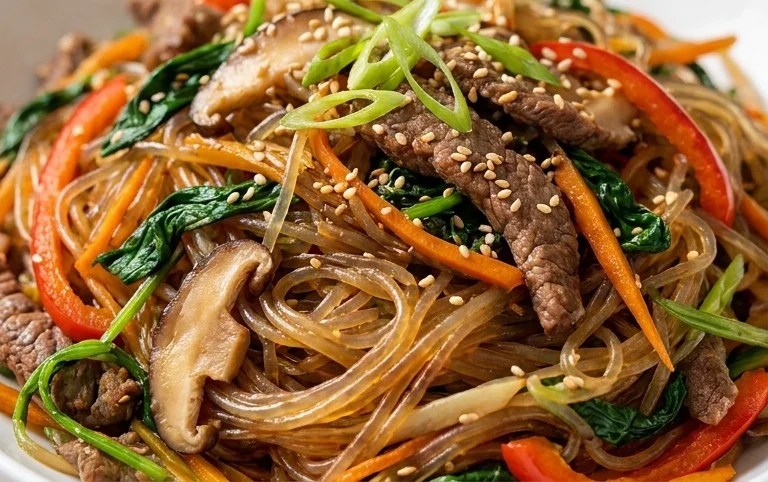
To serve, transfer the Japchae to a large serving platter. Garnish with toasted sesame seeds, if desired. The contrast of colors and textures is stunning. Japchae is best served warm. Enjoy your delicious, homemade Korean classic!
Conclusion:
And there you have it! Your guide to creating delicious and authentic Japchae right in your own kitchen. This classic Korean glass noodle stir fry is a true celebration of textures and flavors, offering a delightful balance of savory, slightly sweet, and umami notes. The slippery, chewy glass noodles, paired with vibrant, crisp vegetables and tender protein (if you choose to add it), make for a satisfying and visually appealing dish that’s perfect for any occasion. I truly hope you’ll give this Japchae recipe a try; it’s a rewarding culinary adventure!
Japchae is incredibly versatile and shines as a main course, a spectacular side dish, or even a delightful appetizer. Serve it warm for an immediate taste of comfort, or enjoy it at room temperature, where the flavors continue to meld beautifully. For a complete meal, consider pairing it with a simple Korean banchan (side dishes) like kimchi or pickled radishes, or alongside a steaming bowl of rice. If you’re feeling adventurous with variations, don’t hesitate to experiment! Consider adding shiitake mushrooms for an extra earthy depth, different kinds of protein like thinly sliced beef or beef, or even a sprinkle of toasted sesame seeds for added crunch and aroma. The possibilities are endless, making each batch of Japchae uniquely yours.
Frequently Asked Questions about Japchae:
What makes Japchae so special?
Japchae is special because of its unique combination of textures – the delightfully chewy glass noodles, the crisp-tender vegetables, and often, savory protein. The balanced flavor profile, featuring soy sauce, sesame oil, and a touch of sweetness, is incredibly satisfying. It’s also a beautiful dish, with vibrant colors that make it a feast for the eyes as well as the palate.
Can I make Japchae ahead of time?
Yes, Japchae can be made ahead of time! In fact, many people find that the flavors meld even further when allowed to sit for a few hours or overnight. Reheat it gently on the stovetop or in the microwave, adding a splash of water or extra soy sauce if needed to prevent it from becoming too dry.
What if I can’t find sweet potato glass noodles?
If you can’t find the traditional Korean sweet potato glass noodles (dangmyeon), you can substitute them with mung bean glass noodles or even cellophane noodles, although the texture might be slightly different. The key is to use a noodle that becomes translucent and chewy when cooked.
Japchae (Korean Glass Noodle Stir Fry)
A savory and slightly sweet Korean stir-fry featuring chewy glass noodles, tender beef, and a colorful assortment of vegetables.
Ingredients
-
12 ounces sweet potato glass noodles
-
16 ounces beef (cut into strips)
-
2 large eggs (beaten)
-
1 large carrot (peeled and julienned)
-
1 medium yellow onion (thinly sliced)
-
3 mushrooms (thinly sliced)
-
2 cups baby spinach (packed)
-
2 stalks green onion (cut into 1 inch pieces)
-
oil (for cooking)
-
Toasted sesame seeds (optional for garnish)
-
Salt and black pepper (as needed)
-
7 tablespoons soy sauce (light sodium)
-
3 tablespoons honey
-
2 tablespoons brown sugar
-
2 tablespoons toasted sesame oil
Instructions
-
Step 1
Cook glass noodles according to package directions. Drain, rinse with cold water, and set aside. -
Step 2
Marinate the beef strips with 2 tablespoons soy sauce, 1 tablespoon honey, 1 tablespoon brown sugar, and a pinch of salt and pepper for at least 15 minutes. -
Step 3
In a large bowl, whisk together the remaining 5 tablespoons soy sauce, 2 tablespoons honey, 1 tablespoon brown sugar, and toasted sesame oil. This is your sauce. -
Step 4
Heat oil in a large skillet or wok over medium-high heat. Stir-fry the marinated beef until browned. Remove beef from skillet and set aside. -
Step 5
Add a little more oil to the skillet if needed. Stir-fry the onions and carrots until slightly tender. Add mushrooms and cook for another 2-3 minutes. -
Step 6
Add the spinach to the skillet and stir-fry until wilted. Add the cooked glass noodles, beef, and green onions to the skillet. Pour the prepared sauce over everything. -
Step 7
Toss all ingredients well to coat evenly with the sauce. Cook for another 2-3 minutes, stirring, until everything is heated through and well combined. -
Step 8
Season with additional salt and pepper to taste. Serve immediately, garnished with toasted sesame seeds if desired.
Important Information
Nutrition Facts (Per Serving)
It is important to consider this information as approximate and not to use it as definitive health advice.
Allergy Information
Please check ingredients for potential allergens and consult a health professional if in doubt.